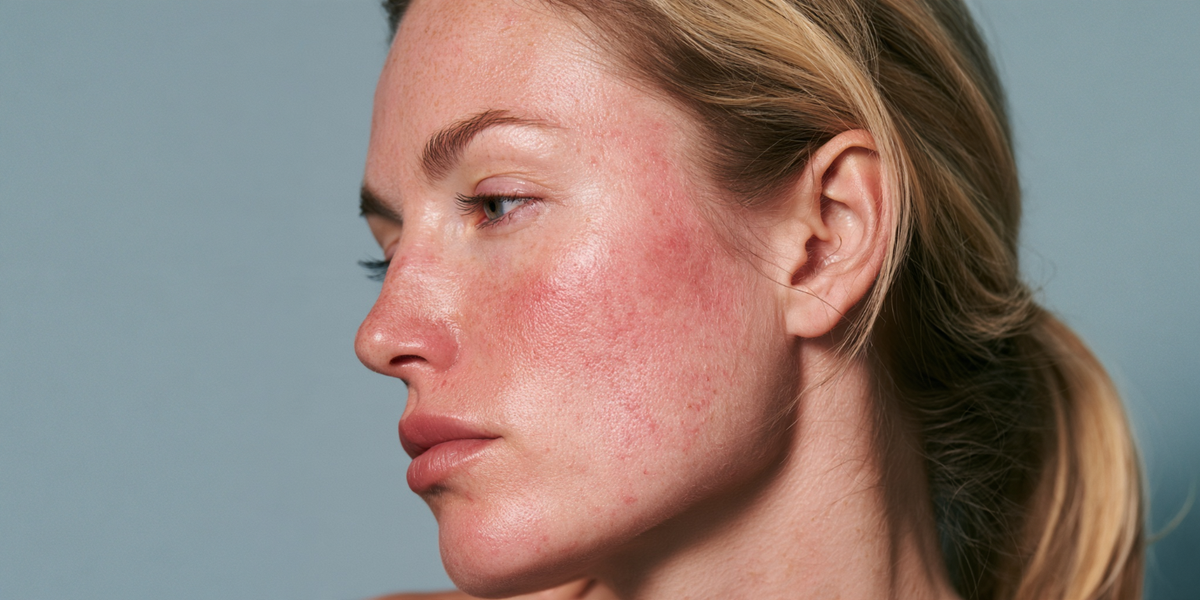
Redness, stinging, tightness, or the feeling that your skin reacts to almost every product? Although these symptoms often occur together, they do not necessarily have the same cause.

Skin reactivity can result from a compromised skin barrier, naturally increased sensitivity, or dermatological conditions such as rosacea.

Over-exfoliation, harsh cleansing, temperature changes, and UV radiation can further increase sensitivity. In rosacea, inflammatory processes and increased vascular reactivity also play an important role, which is why redness can occur even without visible signs of dryness.

Proper skincare begins with understanding the underlying causes of reactivity. Gentle cleansing, skin barrier support, and carefully selected active ingredients can help reduce discomfort and improve the skin's tolerance to everyday environmental stressors.

Reactive skin: similar symptoms, different causes 

Compromised skin barrier
The skin's protective layer consists of corneocytes and intercellular lipids, primarily ceramides, cholesterol, and fatty acids. When its function is compromised, transepidermal water loss (TEWL) increases, and the skin may become dry, tight, sensitive, and prone to stinging.

Sensitive skin
Sensitive skin may experience unpleasant reactions such as stinging, itching, or burning, even without visible signs of damage. Increased sensitivity of nerve endings and individual responses to external stimuli can play an important role.

Rosacea-prone skin

Rosacea is a chronic inflammatory skin condition often characterized by redness in the central part of the face, episodes of flushing, burning sensations, and sometimes acne-like inflammatory lesions. It is associated with changes in vascular regulation and immune response, while symptoms can be aggravated by UV radiation, heat, and other individual triggers.

What do they have in common?
Although they require different approaches, all three conditions can benefit from gentle cleansing, hydration, UV protection, and carefully selected formulations. For rosacea-prone skin, ingredients such as azelaic acid may offer additional benefits, while for an acutely compromised skin barrier, the priority is to minimize irritation and support barrier recovery.

Reactive skin

Recommended

  • Use gentle cleansers that do not leave the skin feeling tight.
  • Choose skincare products with ceramides, panthenol, and ectoin to support the skin barrier.
  • Apply broad-spectrum SPF protection daily.
  • Adjust skincare textures according to your skin type and level of dryness.
  • Gradually introduce active ingredients such as azelaic acid while monitoring skin tolerance.
  • For rosacea, identify individual redness triggers and consult a dermatologist.

Avoid

  • Over-exfoliation, especially when the skin is irritated.
  • Harsh cleansers, hot water, and excessive rubbing of the skin.
  • Products containing fragrances or other ingredients that trigger individual reactions.
  • Introducing multiple new active ingredients at the same time.
  • Unnecessarily complicated skincare routines that increase the risk of irritation.
  • Applying active treatments to skin that is experiencing intense stinging or acute irritation.

Need help choosing?

Our team is at your disposal for any questions about our products or a protocol tailored just for you. Contact us via the form and we will respond as soon as possible.